
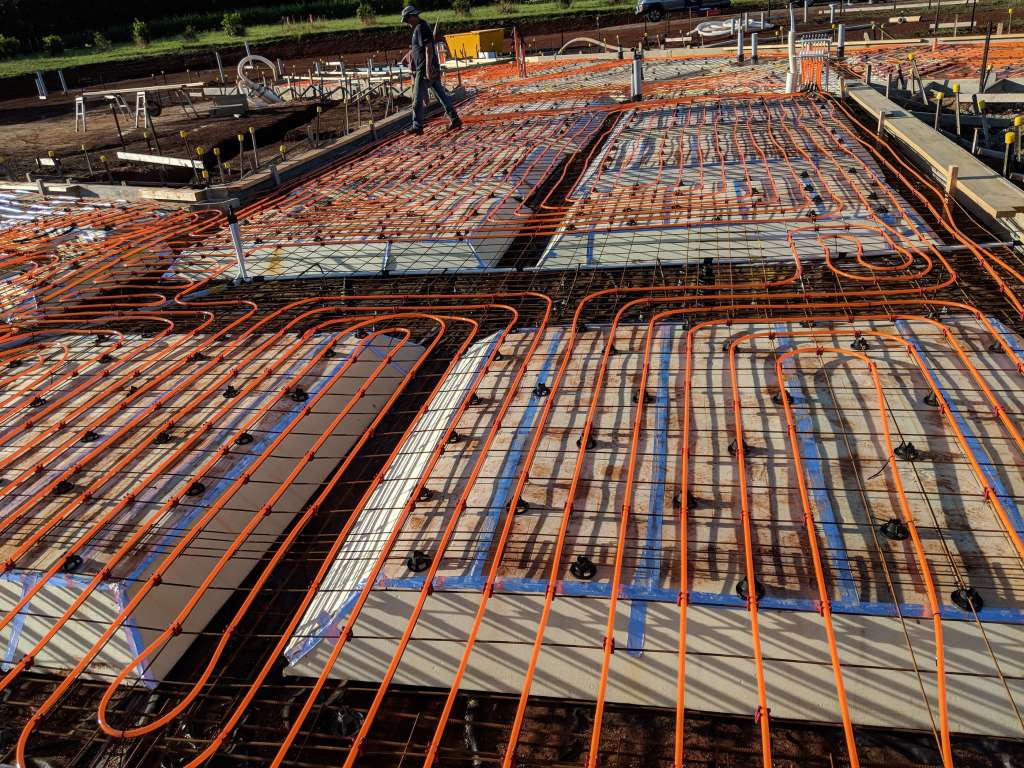
Waffle Pods
Concrete slabs are durable and provide thermal mass. A slab acts as a thermal battery, absorbing warmth from the sun or a heat pump during the day and releasing it slowly into the evening.
But concrete also carries a heavy carbon burden due to cement production. Waffle pods reduce the amount of cement significantly, whilst also providing floor insulation and a thermal battery.
So are waffle pods the answer?
Not for Reactive Soil
Waffle pods make good sense provided the soil underneath is not reactive. However, reactive soils such as clay will move and crack when they dry, just like in Australian desert clay pans. This will likely cause cracking in the waffle pod slab over time.
Therefore, if your soil is reactive, consider other flooring types.

Raft Slab
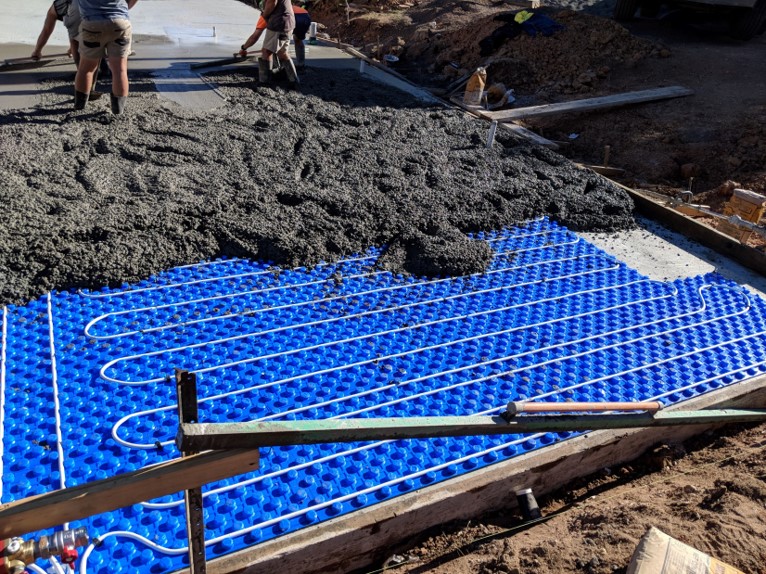
A raft slab has a stronger structure with steel reinforced edge and internal beams. This means it can be laid over reactive clay ground, which makes it a popular choice for Melbourne homes.
Consider a second screed layer if you wish to create a finished floor. Embed hydronic coils in this insulated screed layer for more responsive hydronic heating and area cooling.
Slab as a Thermal Battery
The downside of a raft slab is the high carbon content from cement production. However, the upside is the large thermal battery that can be used to absorb heat during the day.
It is best to have solar power that can run a heat pump during the day and convert your electrical energy into thermal energy, stored in the slab.
Make sure your slab is insulated underneath and slab edges to retain the heat if you do not have an insulated screed layer.
Post Tensioned Slab
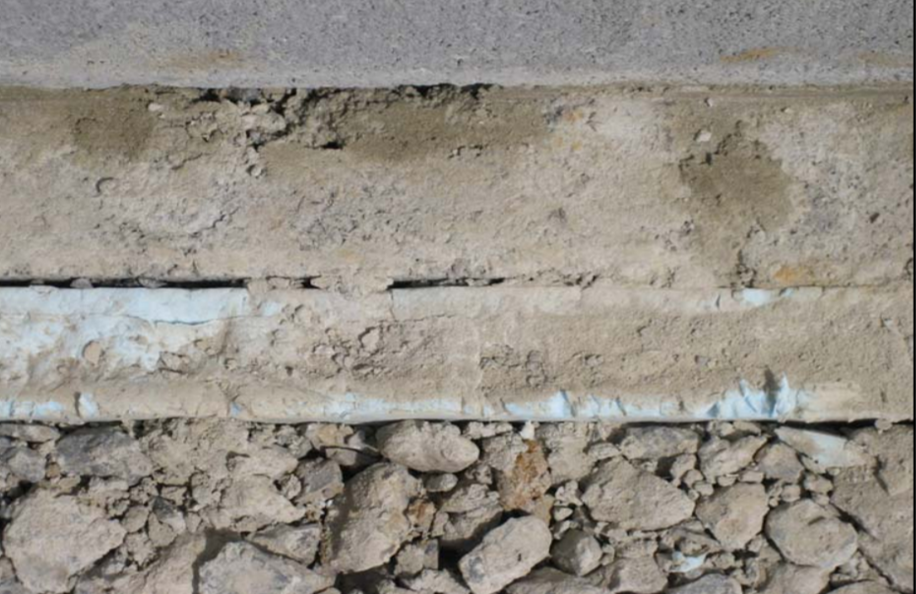
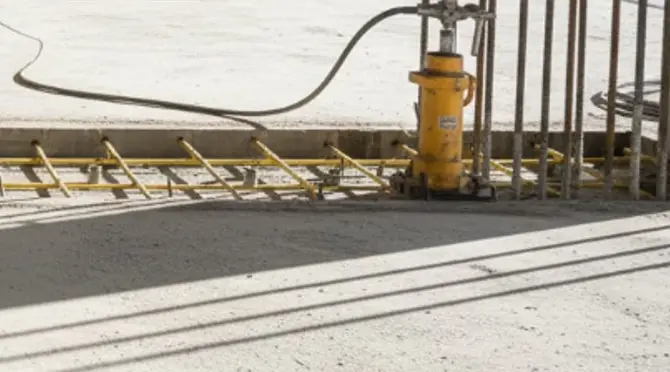
A post‑tensioned slab is another option. The embedded steel tendons are tightened using specialised equipment prior to the concrete pour. This allows the slab to be thinner whilst maintaining strength and thermal mass. It reduces the concrete volume by up to 40%.
However, it is more cost effective for larger projects with elevated floors.
Suspended Timber Floors
Timber sequesters carbon but makes a lightweight floor with low thermal mass.
Therefore, consider pairing it with low-carbon internal thermal mass elements such as rammed earth internal walls or phase change materials.
Suspended floors are better for sloping blocks and with highly reactive soils. Also, they are less expensive than concrete slab options.
Summary
The best sustainable flooring depends on your design intent:
- For maximum thermal mass, choose a raft slab-on-ground. Add hydronic coils in-slab to create a thermal battery with a heat pump on during the day using solar power.
- For optimal energy efficiency, choose an insulated raft slab with internal thermal mass.
- If embodied carbon is your priority then choose a waffle pod with added low-carbon internal mass.
- Choose a suspended timber floor with added low-carbon internal thermal mass if you have a sloping block or reactive soil, and want the lowest carbon footprint.
Related BLOGs
Here are some related Hydrosol BLOG links for further information: